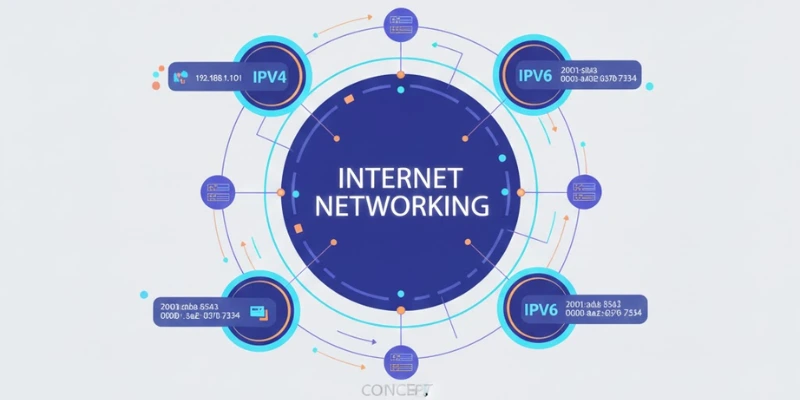
Every time you open a website, send an email, or stream a video, your device relies on a unique identifier to communicate over the internet. Many beginners find networking concepts confusing because they feel abstract at first. Understanding IP addresses clears this confusion and builds a strong foundation for networking roles. For learners shaping their technical direction through CCNA Course in Trichy, knowing how IP addresses work is an essential step toward real-world networking confidence.
The Basic Meaning of an IP Address
An IP address is a unique number assigned to every device connected to a network. It helps devices find and talk to each other, similar to how a home address helps people receive mail. Without IP addresses, data would not know where to go. Each request you make online depends on this system working correctly in the background, silently guiding information to the right destination.
IP addresses also help networks manage traffic efficiently. Routers use them to decide where data packets should be sent next. This process happens in milliseconds, making communication feel instant. Understanding this concept helps learners visualize how the internet stays organized despite billions of connected devices.
Why IP Addresses Are Necessary
Imagine a city where every house looks the same and has no address. Delivering anything would be impossible. Networks face the same problem without IP addresses. They ensure that data reaches the correct device instead of getting lost. This is especially important in large networks like corporate offices or cloud systems.
From a career perspective, knowing why IP addresses matter helps in troubleshooting real issues. When something fails, network professionals often start by checking IP configurations. This practical relevance makes the topic common in interviews and entry-level technical discussions.
Understanding IPv4 in Simple Terms
IPv4 is the older and most widely known version of IP addressing. It uses a 32-bit format written as four numbers separated by dots. Each number ranges from 0 to 255. This structure made the early internet possible and supported billions of devices for many years.
However, IPv4 has a limitation in the number of unique addresses it can provide. As internet usage exploded, this shortage became a serious concern. Understanding IPv4 helps learners appreciate both its simplicity and its constraints in modern networking environments.
Why IPv6 Was Introduced
IPv6 was designed to solve the address shortage problem of IPv4. It uses a 128-bit format, allowing an enormous number of unique addresses. This makes it future-ready for growing technologies like smart devices and large-scale cloud systems.
IPv6 also improves efficiency and security in some areas. While it looks complex at first, its structure follows clear rules. Learning IPv6 concepts becomes easier when you connect them to real needs, much like analytical skills developed in paths such as Data Analytics course in Trichy, where patterns and logic play a key role.
Key Differences Between IPv4 and IPv6
The most visible difference is address length, but the impact goes deeper. IPv6 reduces dependency on techniques like address sharing, which IPv4 often relies on. This simplifies network design in many cases. IPv6 also handles routing more efficiently, helping data move smoothly across large networks.
For beginners, comparing the two versions helps solidify understanding. Interviewers often test this comparison to see whether candidates grasp not just definitions, but also the reasons behind technological evolution in networking.
How IP Addresses Work in Daily Internet Use
When you type a website name, your system converts it into an IP address using background services. This allows your device to locate the server hosting that website. The entire process happens instantly, even though multiple systems are involved.
This behind-the-scenes flow becomes easier to understand when broken into steps. Learners exploring CCNA Training in Erode often gain clarity by connecting theory with everyday actions like browsing or messaging, making networking feel more relatable and practical.
Career Importance of Understanding IP Addressing
IP addressing is a core topic for networking, cybersecurity, and cloud roles. It forms the base for advanced concepts like subnetting, routing, and network security. Without this knowledge, progressing to higher-level topics becomes difficult.
Employers value candidates who understand fundamentals deeply. Explaining how IP addresses work shows structured thinking and problem-solving ability. This makes it a recurring topic in technical interviews for entry-level and mid-level positions alike.
Understanding IP addresses, along with IPv4 and IPv6, turns networking from a mystery into a logical system. It helps learners see how devices communicate, how problems are diagnosed, and how networks scale for the future. As careers increasingly blend networking with data-driven roles, skills strengthened through Data Analytics Course in Erode can support long-term growth and adaptability in evolving tech environments.
Also Check: Road-Map To The CCNA Certification